Cicero Epoxy Flooring has spent more than 20 years on epoxy flooring in Summit and the surrounding Cook County towns, and the floors we are asked about here are mostly basements and garages that may already have been under water. Before we quote a system, we ask what happened to the floor after the last storm and what it would take to get it back into service after the next one.
That question matters more in Summit than in most places, because the village’s own code keeps a record of flood repairs over the life of each building. A floor that has to be torn out and redone every time water comes in adds to that record. A floor that can be cleaned, dried and kept is a smaller job each time, and that is the floor we try to build.
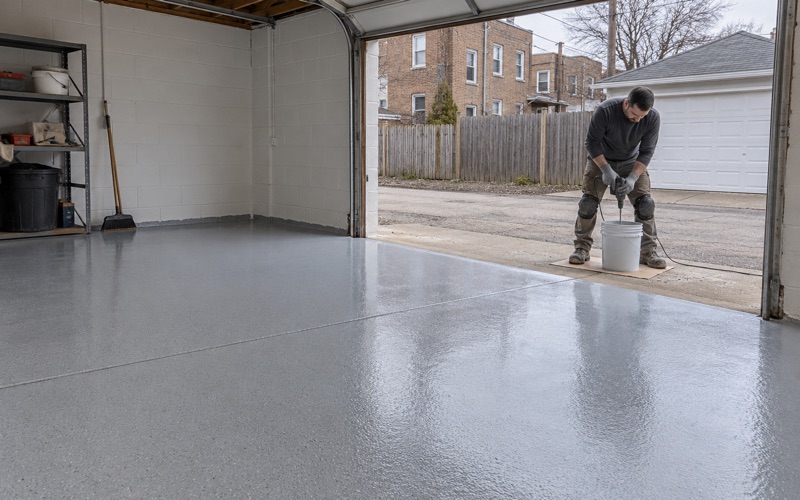
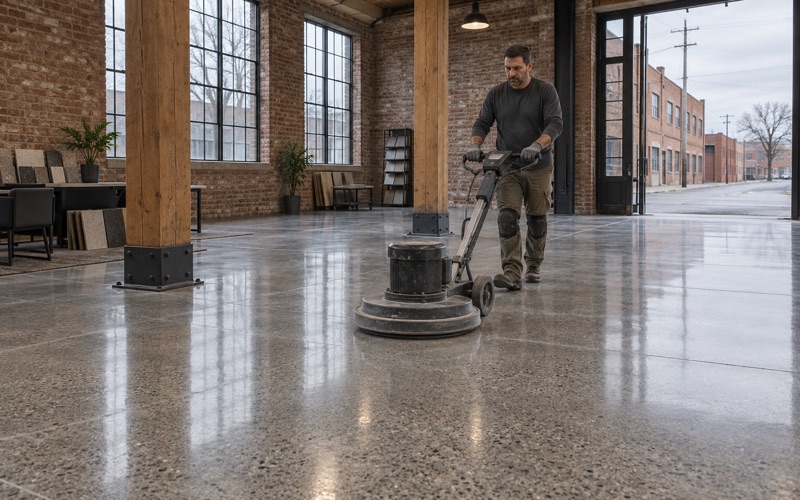
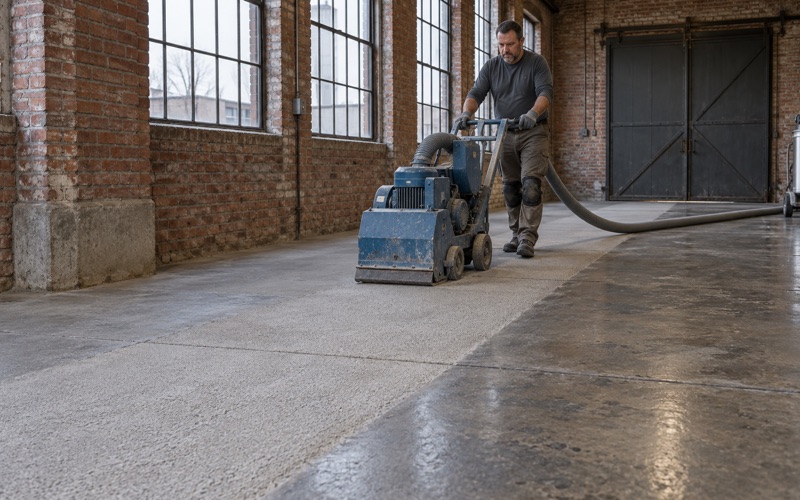
We start every job by grinding or shot blasting the slab, never acid etching it, and a moisture test is part of the written scope before the price is final. The proposal names the product line, the coat count and the finished thickness, so you can hold the finished floor up against the quote.
The Inspection That Comes After the Water
Who Makes the Call in Summit
Summit’s floodplain chapter gives a specific duty to the Superintendent of Public Works: after a flood, make damage determinations on all damaged buildings in the special flood hazard area. The village’s 2024 hazard mitigation annex states that the majority of Summit sits in the Des Plaines River floodplain, so this is not a rule that touches a few houses at the edge of town.
Whether a particular house is inside the special flood hazard area, and how its damage is counted, is a Public Works determination made through the Village of Summit Building and Public Works department at 7321 W 59th Street. It is not something we decide, and we will not guess at it when we quote a basement floor.
Two Storms Already on the Record
Village officials said the last severe flooding before the July 2025 storms came in July 2023, and that the sewer system was overburdened both times. On Friday, July 25, 2025, one Summit resident had three feet of water in his basement, and another family stood waist-deep in a basement they had just finished, losing a new washer and dryer.
For a basement floor, each of those nights is a possible entry on the building’s history. If the finish came up and was replaced in 2023 and replaced again in 2025, both jobs are part of the story Public Works can look at the next time water comes through. That is why we ask about past floor repairs before anything else.
What We Ask Before We Quote
We ask when the basement last took on water, how deep it got, what came out afterward and who did the work. We ask whether there is old paint, patching compound or adhesive on the slab, because an older basement floor can carry layers from earlier fixes that change which system will bond. Summit’s housing stock stopped growing after the 1970s, so nearly every job here is an existing slab.
Looking for epoxy-flooring closer to La Grange Park? See La Grange Park Epoxy-Flooring.
Fifty Percent, Counted Over the Life of the House
How Summit Defines Substantial Damage
The village defines substantial damage as damage of any origin where the cumulative percentage over the life of the building equals or exceeds 50 percent of the structure’s market value before the damage occurred, regardless of the repair work actually performed. The definition also states that it includes repetitive loss buildings. Summit’s annex lists one FEMA repetitive loss property in the village, a single-family home.
Three phrases in that definition do most of the work. Cumulative means the count does not reset after each storm, and over the life of the building means damage from years ago can still sit in the total. Regardless of repair work performed means the damage is weighed whether or not anyone ever fixed it.
Why a Floor Tear-Out Adds Up
A basement floor is rarely the biggest number after a flood, but it is one that tends to repeat. A carpet, a click-together plank floor or a peeling paint job that has to come up after each backup is a recurring line, and the definition is built to add recurring lines together rather than look at them one storm at a time.
We cannot tell you where your building stands against that line, and nobody outside Public Works can. What we can tell you is what a given floor is likely to need after the next backup: a cleanup and a recoat of worn areas, or a full removal down to bare concrete. That is a practical question, and it is the one we answer in writing.
Doing the Work Yourself Still Counts
Summit’s definition says it directly: volunteer labor and materials must be included in the determination. A homeowner who rips out wet carpet, buys a weekend’s worth of floor paint and rolls it on with family help has not kept that work off the books. Both the hours and the supplies are part of the determination.
We say this because the do-it-yourself fix is often the one that has to be redone soonest. Floor paint rolled onto a damp slab that was never ground or tested tends to lift at the next soaking, which turns one volunteer repair into two. Grinding the slab and reading its moisture first is how we try to keep a coating from becoming that second job.
A Floor You Can Clean Versus a Floor You Replace
What a Coating Will Not Do
A floor coating does not waterproof a basement, and it will not stop water from coming up a floor drain or through a wall. We say that plainly before any job is sold. If a basement takes on water, the first questions are the drain, the backflow arrangement and the pumps, and those belong with a licensed plumber, not with us.
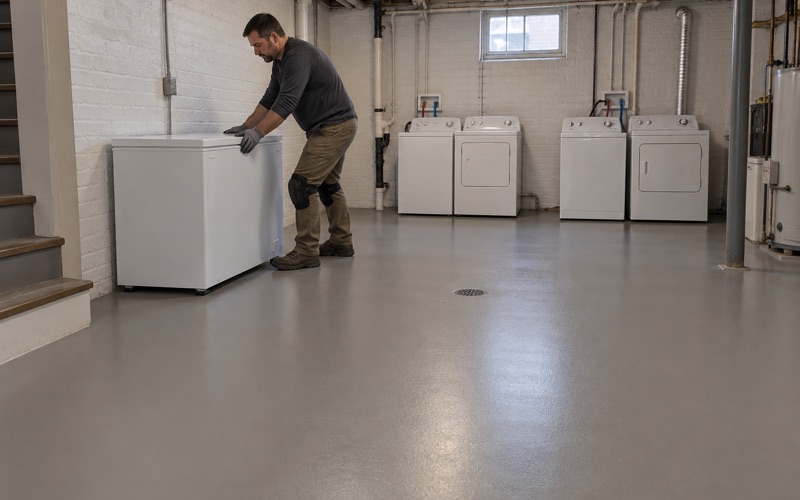
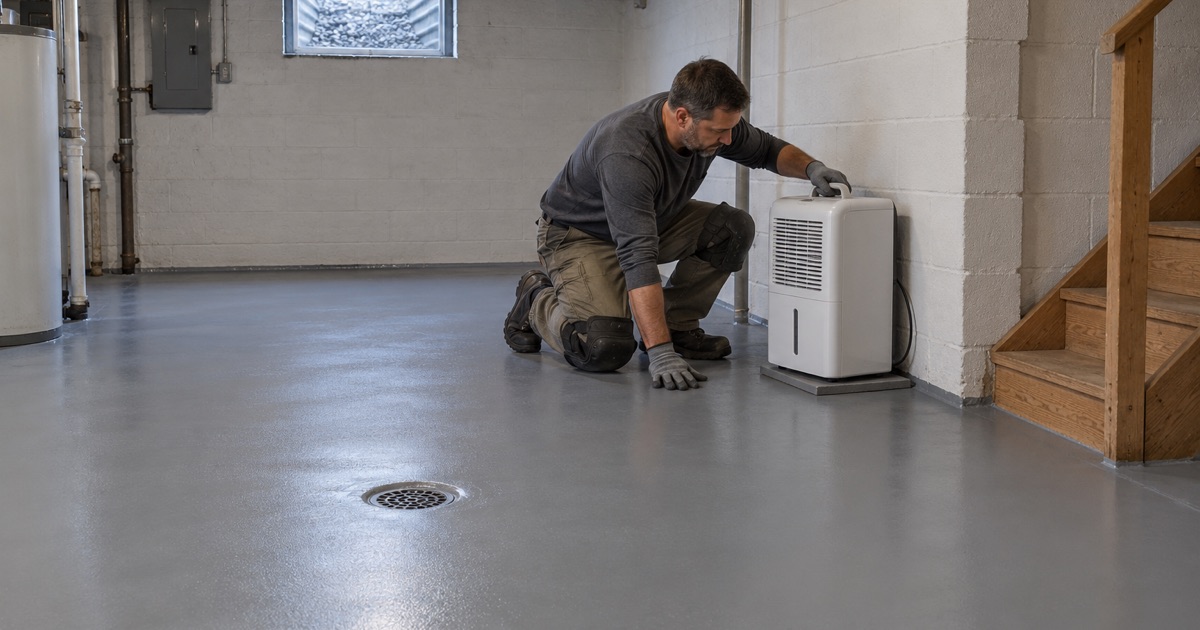
What a coating can change is the cleanup. A continuous resin floor bonded to ground concrete gives backed-up water nothing to soak into, so after the water is pumped out the job is scrubbing, disinfecting and drying rather than hauling soaked flooring to the curb, as Summit residents were asked to do with damaged items by Monday, July 28, 2025.
Systems That Survive a Cleanup
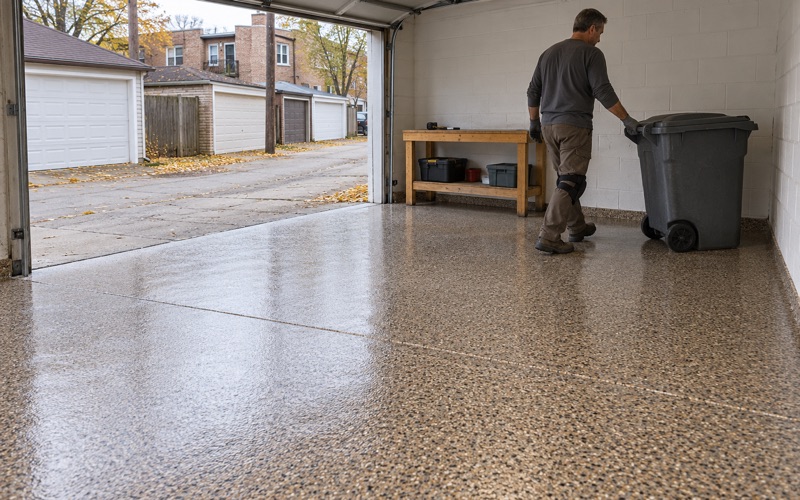
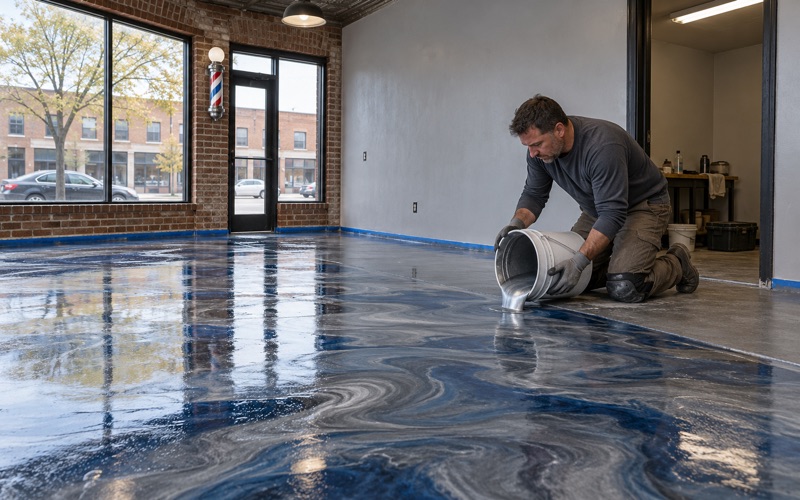
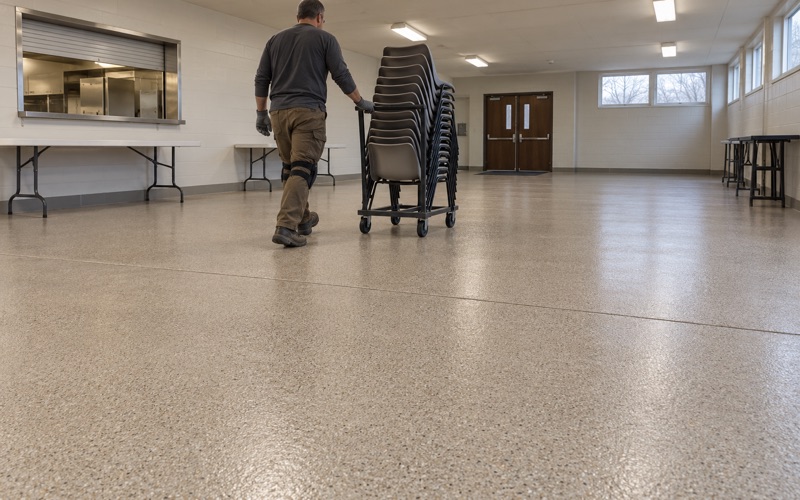
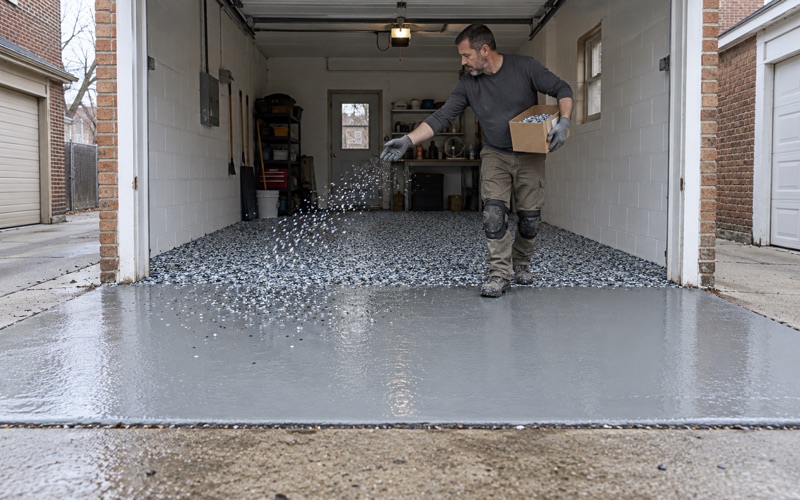
For basements that may flood again, we lean toward a 100% solids epoxy base with a polyaspartic or polyurea topcoat, or urethane cement where the slab carries more moisture or the room sees hot water and harsh cleaners. A vinyl flake or quartz aggregate broadcast hides wear and gives the surface some texture underfoot when it is wet.
We also cove the coating a few inches up the wall where the layout allows, so the joint between floor and wall is easier to clean after water sits against it. A cove is an added cost, and we price it as its own line so you can decide. Around a floor drain, the coating is finished cleanly to the drain body so it can be cleared without chipping the edge.
Testing the Slab Before Anything Goes Down
A basement slab that has sat under water holds moisture long after the surface looks dry. We read it with ASTM F2170 in-situ relative humidity probes or ASTM F1869 calcium chloride testing, and where the numbers are high we use a moisture-mitigation primer rather than gamble on a standard base coat.
Moisture is also the first exclusion we name when we explain the warranty, before the job is sold. A basement slab that took water in 2023 and again in 2025 is exactly the floor where that exclusion matters, and we would rather say so at the kitchen table than after a coating lifts.
When the Whole Building Has to Meet Flood Protection
What Crossing the Line Means
Summit’s code says that repairs to a substantially damaged building are figured cumulatively during its life, and that once a building is substantially damaged, the entire structure must meet the flood protection standards in the floodplain chapter. That is no longer a question about one room. It reaches the whole house.
Under the elevation method, the lowest floor, basement included, has to sit at or above the flood protection elevation. Areas below that line may be used only for parking, building access or storage in an area other than a basement, and may not later be modified or occupied as habitable space. For a finished basement family room, that is a very different future.
What This Means for a Floor Decision
None of this means a coated floor lowers a damage determination, and we will not tell you it does. No source we know of says so, and the call belongs to Public Works. What it does mean is that a basement floor in Summit is worth choosing for how it behaves the second and third time water arrives, not only for how it looks the first week.
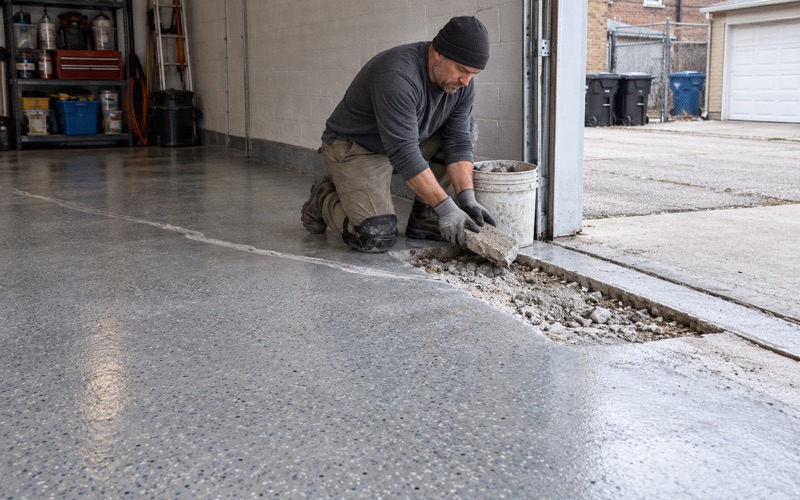
We also map the cracks, spalls and old coatings before pricing, and if a slab is too far gone to coat, we say it needs repair or replacement first. Putting a new finish over a failing slab only adds another job to the history of the building. When the slab is sound, the coating goes on over a profile we set with a diamond grinder or shot blaster to the ICRI CSP range the product calls for.
Timing the Work After a Flood
A slab coming out of a flood needs time before it can be coated. We set cure times by slab temperature and the dew point spread at the surface, not by the calendar, and a basement still drying from a backup is told to wait until the readings say otherwise.
For larger home jobs over the state threshold, you get a written contract and the Illinois Home Repair: Know Your Consumer Rights pamphlet before any grinding starts. Illinois has no state flooring license, so we check whatever registration, bond and insurance rules the Village of Summit applies before the job is booked.
- 20+ Years on Concrete
- Moisture Tested Before Pricing
- Written Coat-by-Coat Proposals