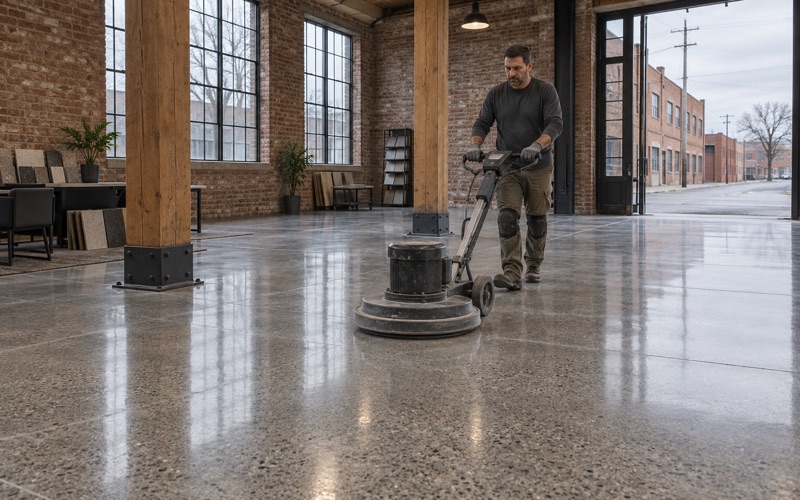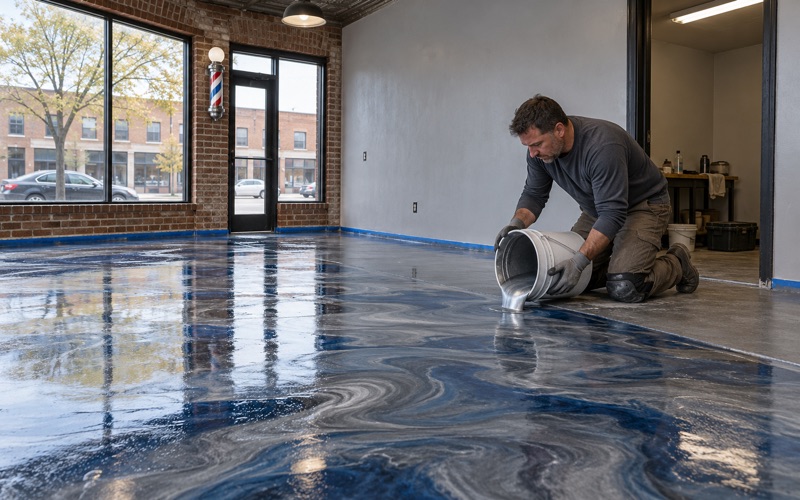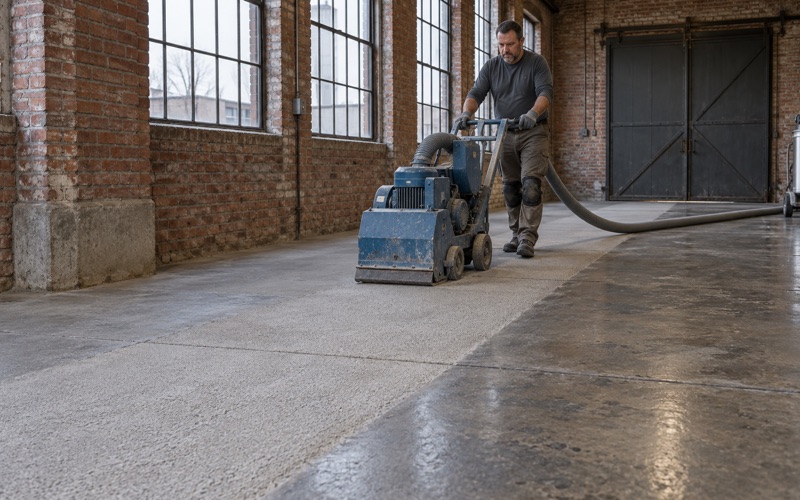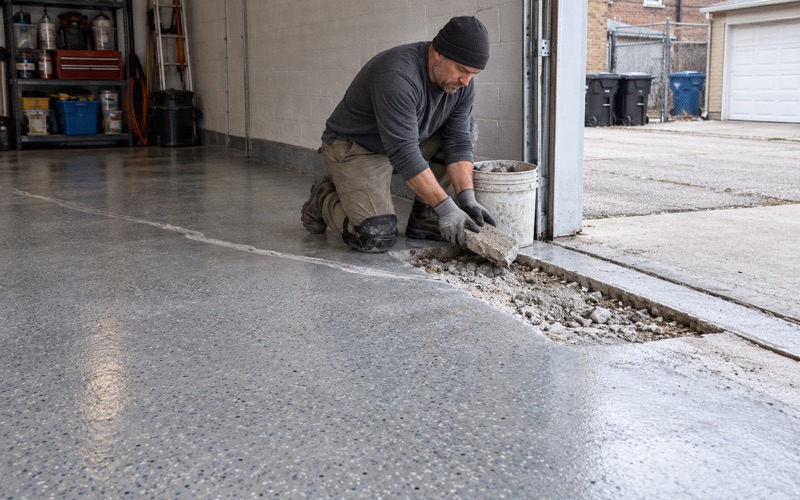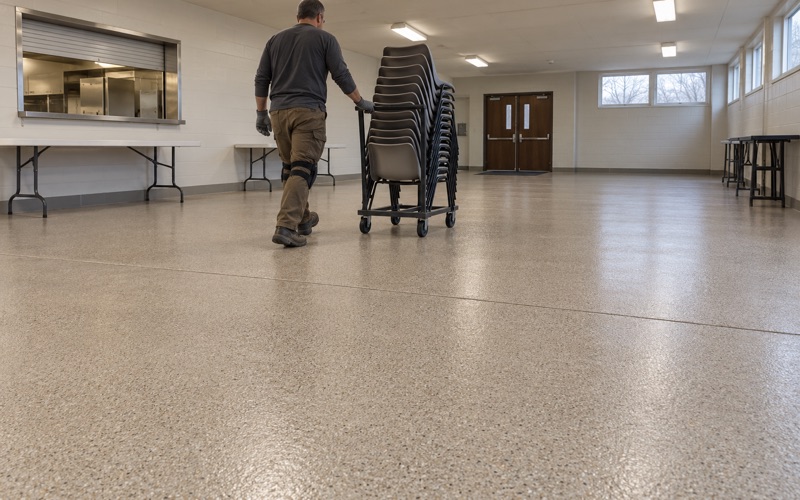
Cicero Epoxy Flooring brings more than 20 years of epoxy-flooring in Midlothian to bar owners, shop operators and homeowners who need a floor that survives hard daily use. Our work starts with the slab itself: a diamond grinder or shot blaster opens the surface, because an acid etch leaves a coating too little to grip. Then we test for moisture before any price becomes final.
Every written proposal we hand over names the product line, the number of coats and the finished thickness, so the floor you end up standing on can be checked against the paper. Before a system is chosen, we map the cracks, spalls and any old coating, and we tell you plainly when a slab needs repair or replacement rather than a fresh coat.
Commercial rooms that never fully close are where timing matters most. A bar, a kitchen or a shop floor usually gets one real chance at a new coating, and that chance tends to arrive when the business pauses for a reason of its own. We plan around those windows, and we explain what a coating warranty excludes, moisture first, before the job is sold.
Taverns That Change Hands on 147th Street
Along 147th Street, which carries Illinois Route 83 through Midlothian, neighborhood bars are sometimes sold as going concerns rather than as empty buildings. One broker listing for 3636-3646 147th Street offered two fully equipped bar and gaming buildings, about 4,950 square feet combined, together with two corporately held, transferable tavern licenses. That kind of sale moves a working room from one operator to the next.
The corridor is a busy one. A separate listing on the same street, a space previously set up for hospitality use at 3356 W 147th Street, cites more than 18,000 vehicles a day passing the door. We have not visited or coated either property; the listings simply show how the street’s bar stock moves, and what an incoming owner inherits underfoot.
Video Gaming and the Licenses That Travel
The same listing describes each building as structured to allow up to six video gaming terminals, subject to all required licensing, municipal and regulatory approvals. Those numbers are the broker’s marketing, not a village or Gaming Board figure, but a room built around terminals tends to share one layout: a row of terminals along one wall, stools in front of them, and a bar rail a few steps away.
A tavern license that transfers with the building lets a buyer step into a licensed business, yet the new owner still has to make the room their own. That is where the floor enters the conversation. A worn, sticky floor carries the old bar’s history into the new one, and it is one of the few surfaces a buyer can replace entirely while the room is dark.
The Rebrand Window Between Owners
The 3636 listing states plainly that a rebrand will be required of the buyer. A rebrand usually means new signage, new finishes and a short closure, and that pause is the rare stretch when a bar floor can be ground, coated and cured without customers walking on it. Waiting until after the reopening means working overnight in a room that never quite dries.
We ask a buyer for the closing date and the planned reopening as soon as both are known. From there we schedule the moisture test, the grinding, the coats and the cure so the floor is fully hard before the new bar staff stock the coolers. If the gap is short, we say which system fits it and which one does not.
Looking for epoxy-flooring closer to Riverdale? See Epoxy-Flooring Services in Riverdale.
What a Bar Floor Takes Every Night
A tavern floor works harder than most commercial floors of the same size. Beer, sugary mixers and soda syrup land on it all evening, ice melts out of bins and wells, cases and kegs roll across it, and at closing the whole surface is mopped wet. Bare concrete soaks up that mix and thin paint lets go under it, and the sticky film and smell follow.
Behind the Bar: Ice Wells, Kegs and Floor Drains
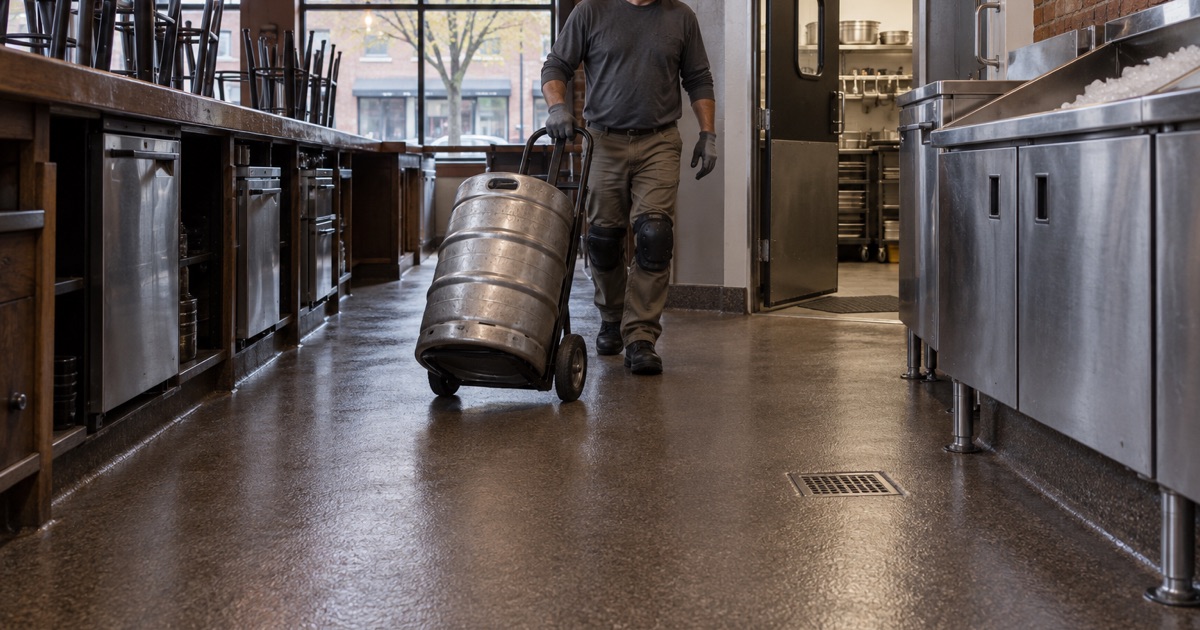
The strip behind the bar is the hardest few feet in the building. Ice wells overflow, beer lines drip, and floor drains collect everything that runs off, so the slab around each drain stays wet more hours than it stays dry. We grind to a profile in the ICRI CSP range the system calls for and keep the finished surface following the slab’s existing fall toward the drain.
Keg and case traffic adds point loads from hand trucks and dropped cases. For that zone we often look at urethane cement, which tolerates heat, moisture and repeated washing better than a thin epoxy, or a 100% solids epoxy with a broadcast aggregate. At each drain body the coating is keyed into a saw cut so its edge does not lift.
The Customer Side: the Bar Rail and the Gaming Terminals
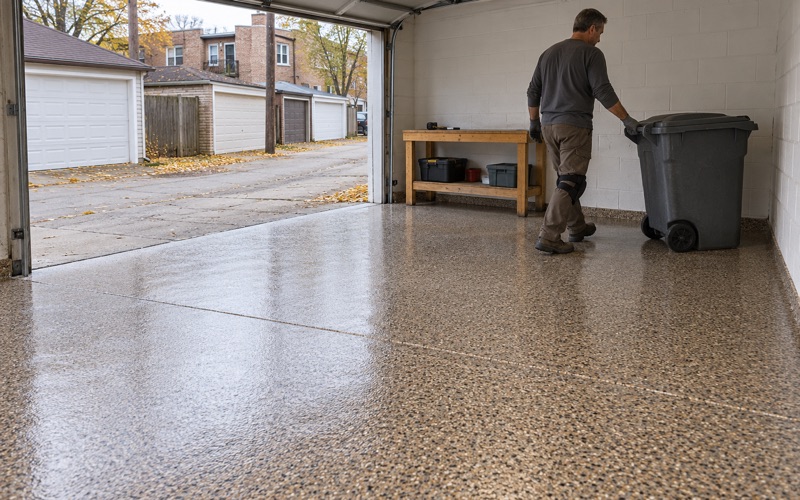
Out front, wear concentrates where people stand and sit. The floor under the bar rail takes heels, spilled drinks and stool legs, and the strip in front of the gaming terminals takes the same scrape repeated night after night. A vinyl flake or quartz broadcast system hides scuffs well and can be renewed with a fresh topcoat rather than a full regrind.
Terminal cabinets are heavy and sit in one place for long periods, so we coat under them only when they can be moved by whoever services them. Power and data runs to the cabinets are left for that party to disconnect. Where the cabinets cannot move during the closure, we stop the coating at a clean edge and finish the strip later.
Sugar, Acid and the Nightly Mop
Spilled beer and mixers are mildly acidic and full of sugar, and over months they etch weak finishes and leave a tacky residue in every pore. Citrus juice and cleaning chemicals add to the load. A chemical-resistant topcoat closes the surface so the spill sits on top, where the closing mop can lift it instead of pushing it deeper.
The cleaning routine matters as much as the coating. We ask what the staff use at closing, how hot the water runs and whether a deck brush or a scrubber is involved, then match the topcoat to that routine. A floor specified without that conversation tends to dull or soften along the exact path the mop takes every night.
Slip Resistance Where Floors Are Mopped Wet at Closing
A floor that is mopped wet every night has to give footing while it is wet, not only once it dries. Smooth, high-gloss epoxy looks clean in a photograph and turns slick under a film of water and syrup. For bar work we build texture into the system from the start rather than adding a grit additive as an afterthought.
Choosing the Texture
Texture is a trade-off between grip and cleanability. A quartz aggregate broadcast locked under a clear topcoat gives strong footing behind the bar, while a finer texture on the customer side still mops out easily. The right texture is set by how the floor is cleaned and who walks on it, and we agree it with the owner before the room is coated, not after the first wet night.
Coved bases help as well. Running the coating a few inches up the wall leaves no seam at the floor line for sticky runoff to settle into, which matters behind a bar where the mop water ends up against the cabinet toe kicks. Where food is also prepared, the health department’s expectations for coved floor and wall junctures are worth confirming before the design is fixed.
Curing Inside a Closed Week
A tight closure tempts everyone to rush the cure, and that is the step we do not compress. Cure times follow slab temperature and the dew point spread at the surface, not the calendar, and a coating laid over a slab that sits too close to dew point can develop amine blush and lose adhesion between coats. Polyaspartic topcoats shorten the return to service where conditions allow.
Any permit question for the work goes to the Midlothian Building Department at village hall on Pulaski Road before we set a start date, since a rebrand often bundles the floor with other interior changes. We also keep products inside the Illinois VOC limits for floor coatings, which matters in a closed room that staff will reopen within days.
Midlothian’s Own Garages and Basements
Bars are only part of the village. Midlothian is a village in Cook County, a southwestern suburb of Chicago with 14,325 residents at the 2020 census, and the large majority of its homes are detached houses. The same habits that matter behind a bar, grinding first and testing first, apply on a residential slab.
Garage Floors and Winter Salt
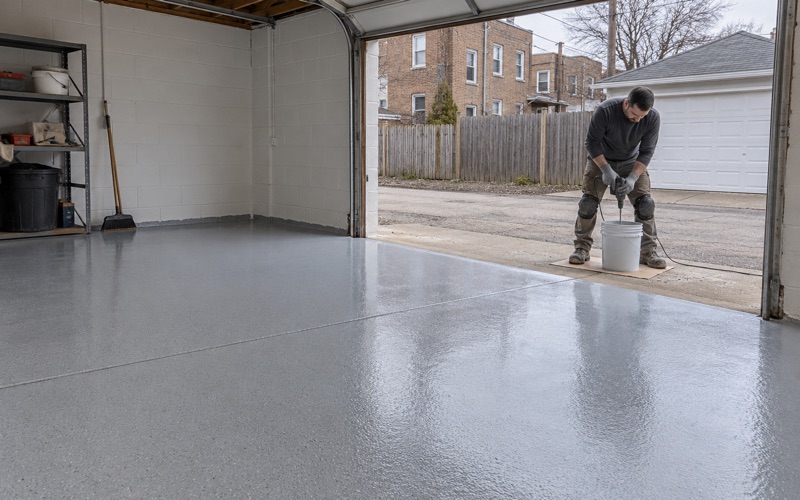
Garage slabs here take rock salt and calcium chloride brine off tires all winter, and that slush sits in puddles under the car for days. We choose garage systems that hold up to those deicers, typically a 100% solids epoxy base with a polyaspartic topcoat that resists hot tire pickup and stains from road chemicals.
We are plain about winter. An unheated garage in January usually cannot hold the slab temperature a coating needs to cure, so we tell the homeowner to wait for spring rather than lay a floor that will soften or peel. For home jobs over the state threshold, a written contract and the Illinois consumer-rights pamphlet come before any grinding starts.
Basement Slabs and Moisture
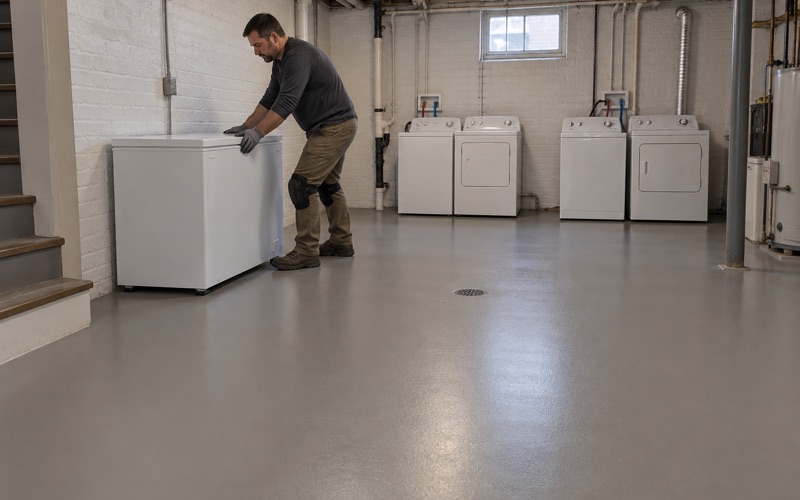
In a basement, the moisture reading decides the system, whether it comes from an ASTM F2170 relative humidity probe or an ASTM F1869 calcium chloride test. A damp slab may need a moisture-mitigation primer, or it may not be a candidate for a coating at all, and we say which before anything is sold.
Older basement floors often carry paint, patching compound or old adhesive, and each changes what will bond, so we check for them first. We are also direct that a coating will not stop water coming up a floor drain; that is a drain and backflow question to settle before the floor is coated, and a fresh coating left in that path is wasted money.
Grinding indoors is done with the vacuum attached at the machine, so the dust is collected as it is made rather than rinsed toward a floor drain afterward. That keeps a basement usable around the work and keeps concrete fines out of the plumbing. The same practice applies on a bar floor, where the drains behind the counter are in daily use.
- 20+ Years on Concrete
- Moisture Tested Before Pricing
- Written Coat-by-Coat Proposals