Cicero Epoxy Flooring has spent more than 20 years on epoxy-flooring in Justice and the surrounding southwest suburbs, and the floors we think hardest about here are working floors. A body shop, a repair bay or a busy garage asks more of a coating than a showroom ever will, so we plan each system around what the floor actually carries.
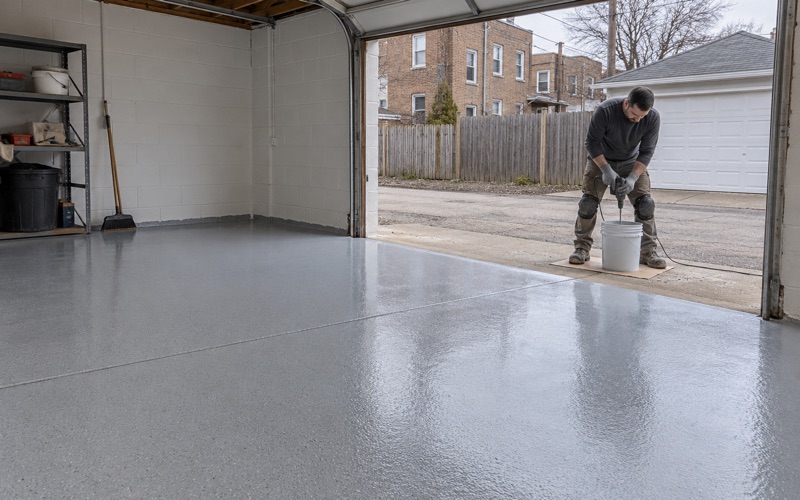
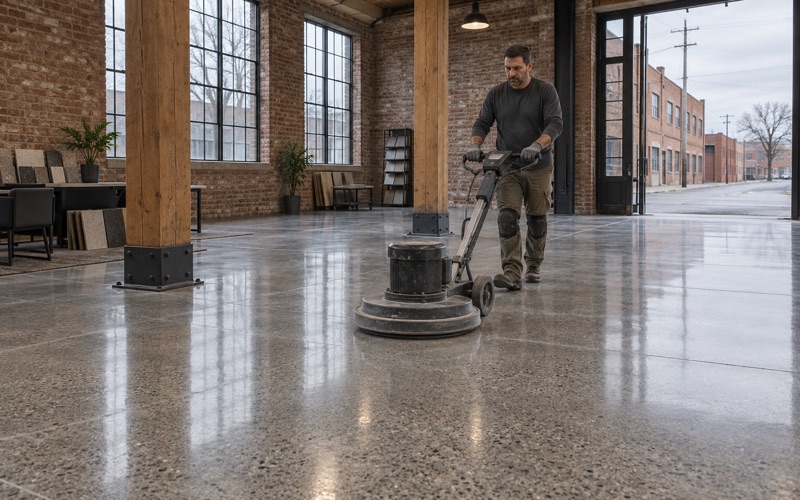
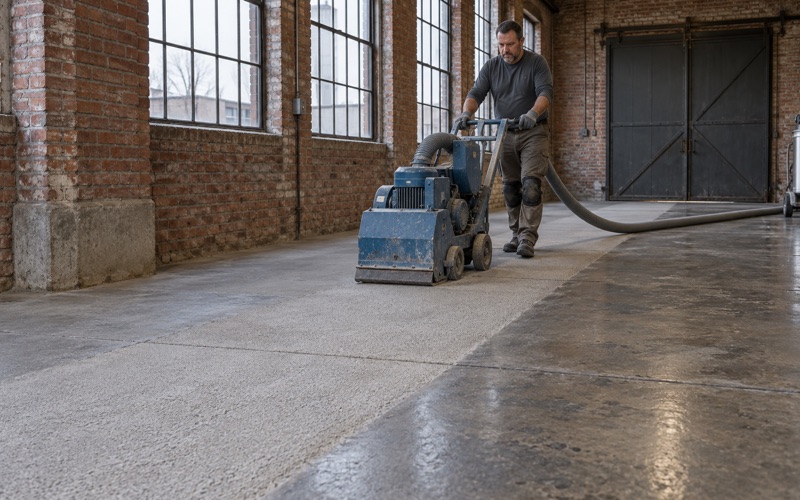
Every job starts with mechanical prep. We open the slab with a diamond grinder or a shot blaster to a measured ICRI concrete surface profile, and we never lean on an acid etch to give the coating its grip. Before that, we map cracks, spalls and any old coating, and we tell an owner plainly when a slab needs repair or replacement before it should be coated at all.
The written proposal names the product line, the number of coats and the finished thickness, so the floor can be checked against the quote once it is down. A moisture test is part of that scope before the price is final, and what the warranty excludes is explained before anything is signed, with moisture named first.
Collision Repair Shops on Roberts Road
What the Village Says About Its Industrial Park
The village’s own 2024 hazard plan annex describes Justice as a place with no major industries but several truck repair shops and body shops in its industrial park. That is a useful starting point for anyone planning a shop floor here, because it means the working slabs in town tend to belong to small repair businesses rather than large plants.
Those floors take fluids, jacks and creepers more often than forklift traffic. The truck side of that mix is its own subject, so here we stay with the collision side, where one floor carries frame equipment and paint work at the same time. That combination is what makes a body shop slab harder to coat well than a typical garage.
TechniCraft Addresses at 8300 and 8349
Roberts Road in Justice holds collision repair shops of the TechniCraft Automotive Group. Performance Auto Repair Experts sits at 8300 S. Roberts Road and a TechniCraft shop sits at 8349 S. Roberts Road, and both addresses geocode inside the village, in Lyons Township, on the US Census Geocoder.
The 8300 shop lists collision repair, frame and structural repair, paint matching and refinishing, and OEM certifications that include Ford, Toyota, Tesla and Mercedes-Benz. We name these shops only to describe the kind of floor this stretch of road holds. Neither is a customer of ours, and we have not seen their floors or their anchor layouts.
What OEM Programs Do and Do Not Say
Certification programs from carmakers shape how a collision shop repairs a vehicle, but we have not read any of them as specifying a floor coating. We will not tell a shop owner that a carmaker requires an epoxy floor, because nothing we have seen supports that claim.
What the floor does have to do is set by the work itself. A frame bench, a paint area and a parts cart all ask something different of the same slab, and the coating plan has to answer each of them in the right part of the shop.
Looking for epoxy-flooring closer to Bridgeview? See Bridgeview Epoxy-Flooring.
Anchor Pots and the Frame-Straightening Floor
Steel Set Flush in the Slab
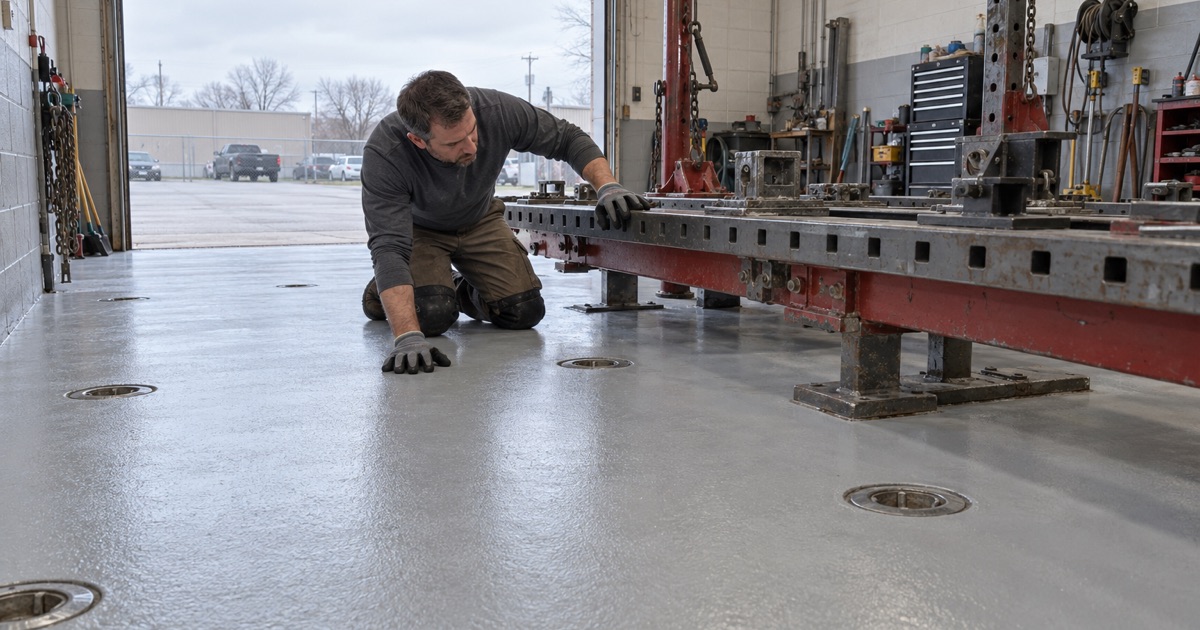
Frame straightening pulls a damaged car body against anchor pots set into cored holes in the concrete. One manufacturer’s product data for a common flush-mount pot, the Mo-Clamp 10-ton model, calls for a 3.5-inch cored hole, a 3/8-inch chain and an installation tool with a torque wrench, and a related listing notes full 360-degree pulling.
Those figures are one maker’s data, not a code requirement, and we do not assume any shop here uses that brand. What matters for the coating is the flush design itself: the pot sits level with the floor when no chain is in it, so tires, dollies and feet roll straight over it.
Coating Tight to the Anchor Steel
A flush pot only stays flush if the coating meets its rim cleanly. We grind right up to each anchor, mask the pocket so no resin runs into it, and build the system so its finished thickness lands level with the steel rather than leaving a lip a chain hook or creeper wheel can catch.
Where an anchor has to be added or moved, the coring comes first and the coating second. Cutting a fresh core through a finished floor can chip the edge around it, so we would rather know the anchor layout before we price the job than patch around a new pot afterward.
When the Slab Under the Pots Needs Repair
Anchor pots concentrate force at a few points, so the concrete around them has to be sound before anything goes on top. We map cracks and spalls radiating from existing cores first, and where the slab around a pot has broken up, we tell the owner it needs repair before a coating will do any good.
A coating bridges nothing structural. Patching a broken core edge with a repair mortar and letting it cure fully helps keep the next pull from cracking the new floor along the same line, and it keeps the pot seated level with the finished surface.
Chains, Dollies and Point Loads
A pull puts a concentrated load into the slab at the pot, in whatever direction the chain runs, while the car sits on stands or a bench nearby. Around that, wheel dollies and frame carts roll the same short paths again and again, and dropped chain links and tools land on the same few square feet.
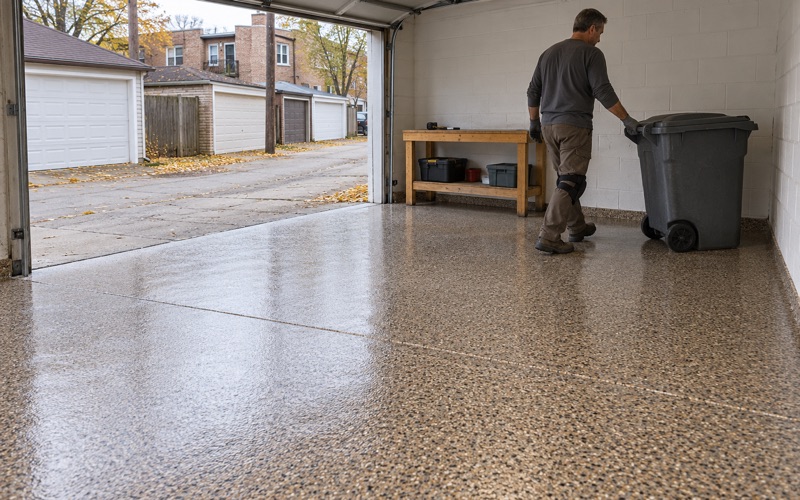
For that zone we favor a thicker build of 100% solids epoxy with a broadcast of quartz aggregate, which takes impact and point loads better than a thin roll-on coat. The aggregate also gives some grip where a technician braces against a chain under tension.
Prep and Refinish Floors Under Solvent and Dust
Solvent, Primer Overspray and Filler
The prep and refinish side of a collision shop is hard on a floor in a different way. Solvent wipes drip, primer overspray settles, body filler gets mixed and dropped, and the sanding that follows leaves a fine dust that gets ground into the surface under every footstep and cart wheel.
A basic epoxy can soften or stain under repeated solvent contact, so in these areas we top the base coat with a solvent-resistant polyaspartic or urethane finish. We confirm the shop’s actual solvents and cleaners before we pick the topcoat, since resistance charts are product-specific and a guess is not a specification.
Sanding Dust and Cleanup
A glossy floor shows dust, and dust that sits on a slick finish can make it slippery. We usually set the texture in prep areas a step coarser than a showroom would want, enough that a wet-mopped or swept floor still gives footing without trapping filler dust in deep grooves.
Dust from our own work gets the same attention. It is vacuumed at the machine rather than washed toward a floor drain, which matters in a working shop where the drains and the bays next door stay in use while we are there, and where a painter in the next booth does not want our dust in the air.
VOC Limits Apply to the Applicator
Our coatings are chosen inside the state VOC limits for floor and industrial coatings in 35 Illinois Administrative Code Part 223, and those limits bind the person applying the product, not just the manufacturer. In a shop that already runs solvent-based paint work, we do not want our floor adding to the air load.
Lower-VOC systems also make it easier to keep part of the shop working while a neighboring bay cures. That leads to the question shop owners tend to raise first: how to coat a floor that cannot simply close for a week.
A Light Floor and a Shop That Stays Open
Color That Helps Painters See
In refinish areas we steer shops toward a light gray or similarly pale topcoat. A light floor bounces light back up onto lower panels and rocker areas, which helps a painter judge coverage and color match, and it makes dropped clips, overspray and filler crumbs easier to spot before they become a problem.
A pale floor also shows wear sooner, so we keep the solvent-resistant topcoat on top of it rather than leaving bare epoxy exposed. Darker or flecked finishes can still make sense in the frame and mechanical bays, where hiding tire marks matters more than reflecting light.
Phasing Around Bays a Shop Cannot Close
A busy body shop usually cannot stop taking cars while its floor is done. We phase the work bay by bay, with overnight and weekend windows where a bay has to be back in use by Monday, and we lay out the sequence with the shop so the frame bench and paint area are never down at the same time.
Cure times are set by slab temperature and the dew point spread at the surface, not by the calendar. A shop with its heat running is far easier to schedule than an unheated building, and when conditions are wrong we say so and wait rather than reopen a bay on a coating that has not cured.
Densifier or Coating in Low-Traffic Rooms
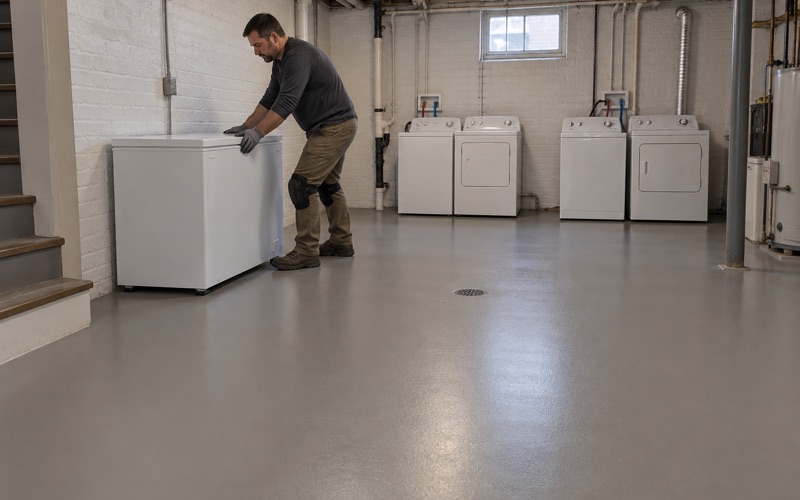
Not every room in a collision shop needs the full system. A parts storage room or an office corridor may do well with a lithium silicate densifier and a polish, which hardens the surface and cuts dusting at a fraction of the build, while the full epoxy and topcoat goes where chains and solvents actually work.
Splitting a building this way keeps the budget on the floors that earn it. It also shortens the closure for rooms a shop needs every day, since a densified floor can usually take foot traffic again far sooner than a multi-coat system can.
Registration and a Zone-by-Zone Scope
Illinois licenses no flooring or coatings contractor, so the credential that binds a job here is the village’s own. The Village of Justice Building Department runs a Contractor’s Work Permit Program that requires contractors to be insured, licensed and registered with the village, and we check those rules before a shop job is booked.
Shop slabs can carry fluids, old coatings or patching, and each of those changes the prep. So the frame floor, the refinish area and any mechanical bays get their own line in the proposal, each with its own system, coat count and thickness, rather than one blended price for the whole building.
- 20+ Years on Concrete
- Moisture Tested Before Pricing
- Written Coat-by-Coat Proposals