
Cicero Epoxy Flooring installs commercial epoxy flooring in Cicero, IL, serving surrounding cities including Forest Park, Lyons, River Forest, Brookfield and Summit. Over 20+ years of coating concrete, we have learned that commercial floors fail for predictable reasons: the wrong system for the traffic, preparation cut short to save a day and a schedule that forced coats down before the slab was ready. Every commercial proposal we write is built to avoid those three mistakes.
A commercial floor is specified against how the space is actually used, including wheel loads, chemicals, cleaning routines, temperature and how long the business can afford to be closed. From that, we choose between epoxy, polyaspartic, urethane cement and polished concrete, and write the product line, coat count and finished thickness into the proposal so the completed floor can be measured against it.
Cicero is a working town with a deep industrial base, from metal finishing shops and gear works to large distribution warehouses and the rail yards that serve them. Many of the slabs in those buildings are decades old and carry oil, old coatings and repairs, and we plan for that from the first walk-through rather than discovering it mid-job.
Matching the System to the Floor
Light Commercial and Retail Floors
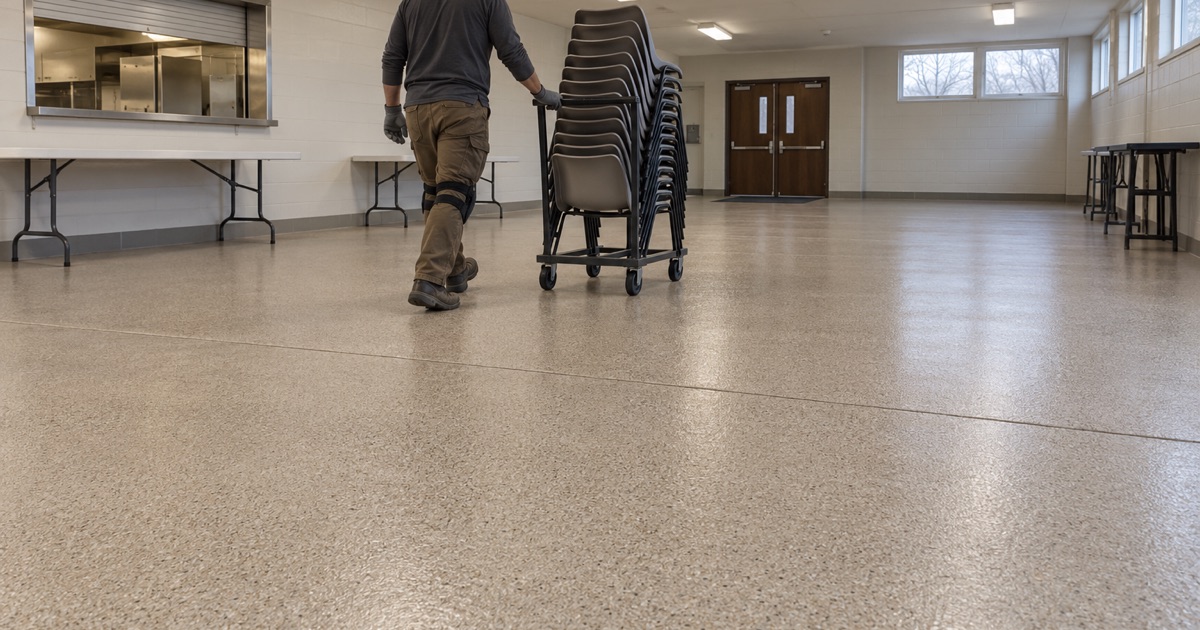
Retail stores, offices, showrooms and salons need floors that look good, clean easily and handle foot traffic and carts. A thin-film or medium-build epoxy with a polyaspartic or urethane topcoat usually fits, often with flake or metallic finishes for appearance. These systems can be installed in phases over a few nights or a weekend so the store keeps trading.
We pay attention to sheen and slip resistance in customer areas. A high-gloss floor can look impressive on opening day but show scuffs quickly and become slick near entrances in wet weather, so we often recommend satin finishes and textured topcoats at doorways.
Warehouses and Distribution Floors
Warehouse floors face forklift and pallet jack traffic, which concentrates heavy loads onto small, hard wheels. Thin coatings crush and wear through in the main aisles within months, so we specify thicker, high-solids epoxy systems or polished concrete depending on the operation. Dock areas and joint lines get extra attention, since that is where damage usually starts.
Large warehouse floors are typically shot blasted rather than ground, then coated in sections. We plan the sequence around racking, shipping schedules and staging areas so the building keeps moving freight while the floor is renewed.
Auto Service Bays and Shops
Auto repair shops, body shops and fleet garages expose floors to oil, coolant, brake fluid, solvents and dropped tools. We build chemical-resistant epoxy systems with durable topcoats for these spaces and pay close attention to lift posts, trench drains and floor edges where coatings tend to fail first.
Some service bays benefit from a light aggregate broadcast for traction, especially where fluids hit the floor regularly. Contrasting colors can also mark bays, walkways and equipment zones as part of the coating.
Preparing Commercial Slabs
Shot Blasting and Grinding at Scale
On large open floors, shot blasting produces an even surface profile quickly and recycles the steel shot through the machine. Edges, corners and tight areas around equipment are diamond ground so the profile is consistent everywhere the coating goes. Every method we use relies on mechanical preparation, never acid etching.
Dust is captured at the machine with industrial vacuums. That matters in occupied commercial spaces, where open product, inventory and neighboring tenants all need protection.
Oil-Soaked and Contaminated Slabs
Older industrial buildings in Cicero often have slabs saturated with cutting oil, hydraulic fluid or machining residue. Oil keeps wicking up from deep in the concrete and blocks the coating’s bond, even after the surface looks clean. We degrease, grind, and test how much contamination remains before choosing a primer.
Heavily saturated areas may need repeated cleaning, specialized oil-tolerant primers or, in severe cases, removal and replacement of the worst concrete. We would rather say so in the proposal than see a new floor lift in the old machine area six months later.
Moisture Testing Commercial Floors
Commercial slabs on grade are tested for moisture just like residential floors. We use calcium chloride kits or in-slab relative humidity probes and compare results with the manufacturer’s limits, adding a moisture-mitigation primer where readings run high.
Moisture is the first exclusion named in most coating warranties, and we explain that exclusion before the job is sold. Testing first is how we keep a warranty meaningful instead of void on day one.
Scheduling, Safety and Compliance
Phasing Work Around Operations
Factories, warehouses and shops that cannot stop are coated in phases, with overnight shifts and weekend windows where a line has to keep running. We agree on the order of areas, access routes and return-to-service times with the facility manager before work starts.
Fast-cure materials such as polyaspartics and some urethane cements can shorten each phase. Cure times are still set by slab temperature and dew point readings, not by the calendar, and in a cold building we plan heat or adjust products to match.
Safety Markings and Slip Resistance
Aisle lines, pedestrian walkways, hazard zones and forklift routes can be coated into the floor in contrasting colors. Coated-in markings outlast tape and paint because they are part of the floor system itself.
Slip resistance is matched to the space by adding aggregate to the broadcast or topcoat. Wet areas, ramps and entrances get more texture, while dry storage and office areas stay smoother for easier cleaning.
VOC Limits and Product Selection
Cook County lies inside the Chicago 2015 ozone nonattainment area, and Illinois regulates VOC content in floor and industrial maintenance coatings under 35 Ill. Adm. Code Part 223. Those limits apply to whoever applies the coating, not only to the manufacturer.
We select compliant products before ordering. Many high-solids and 100% solids epoxies naturally fit within the limits, but some topcoats and specialty products need checking, and that check happens before the material reaches your building.
- 20+ Years on Concrete
- Moisture Tested Before Pricing
- Written Coat-by-Coat Proposals