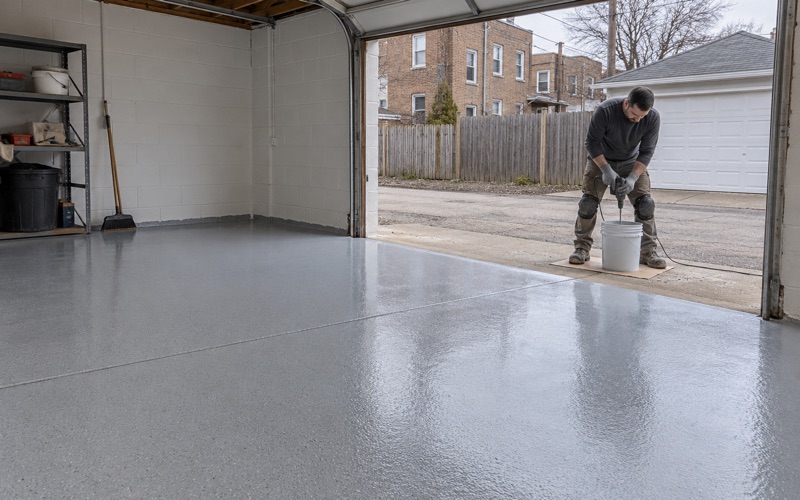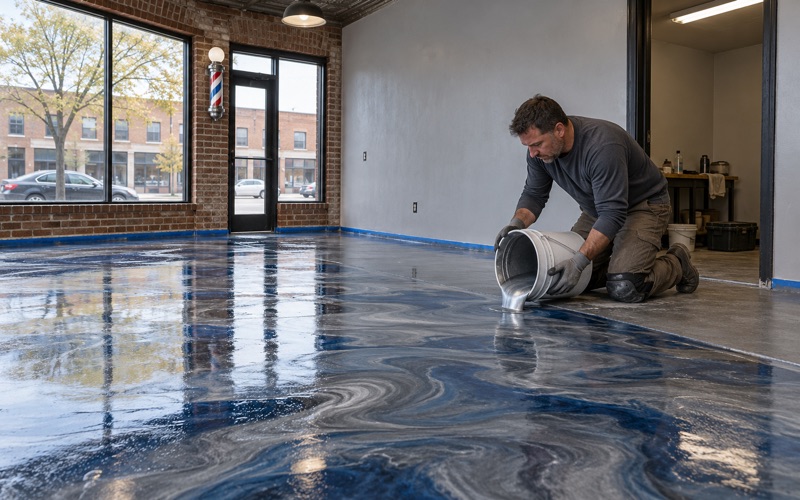
Cicero Epoxy Flooring has spent more than 20 years putting epoxy flooring in Brookfield garages, basements and work floors, and the first thing we do on any slab is look at how water reaches it. A coating is a wear surface bonded to concrete. It handles tire traffic, salt and spills well, but it is only as good as the slab underneath and the conditions around it.
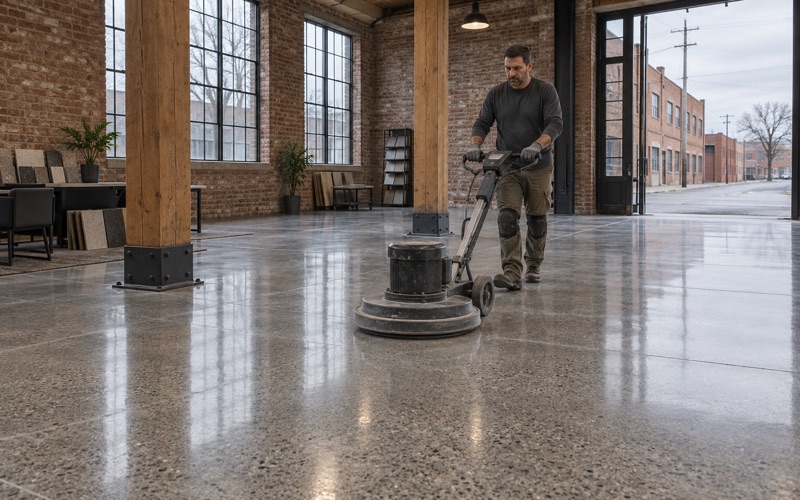
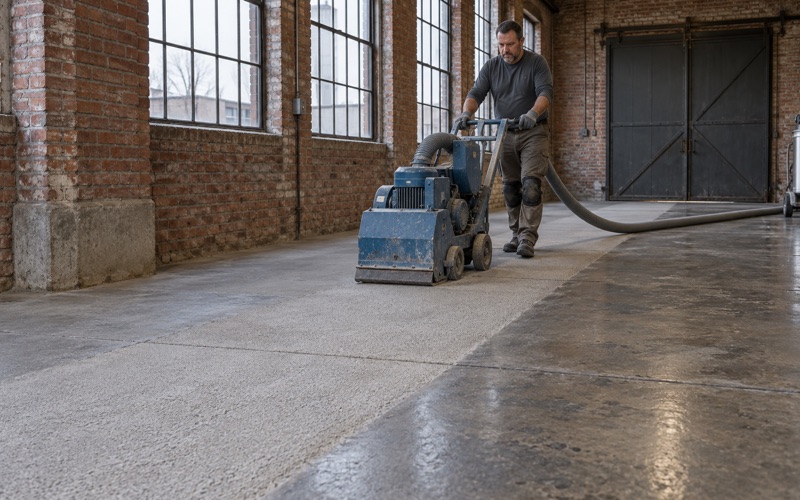
That is why every quote starts with grinding and testing rather than a color chart. We open the surface with a diamond grinder or shot blaster, never an acid etch, and a moisture test is written into the scope before the price is settled. The proposal names the product line, the coat count and the finished thickness, so you can hold the finished floor up against the paper.
On some blocks in this village, the practical question is not only what the floor is made of but what happens at its lowest edge during a hard storm. The sections below cover that, and how it changes the way we build a garage floor that has to live with it.
When Salt Creek Sits Above the Outfalls
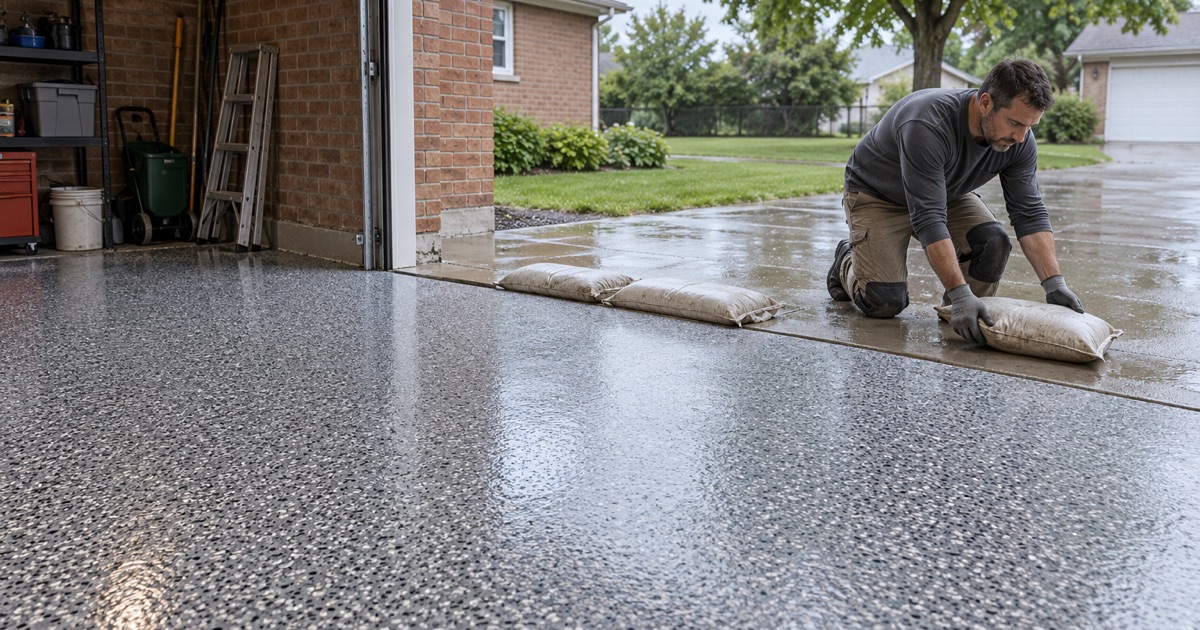
Storm sewers work by gravity. Rain runs off the street, into the inlets, through the pipes and out an outfall into a creek. That only works while the receiving water sits lower than the end of the pipe.
A creek that decides whether the street drains
Around Forest and Washington avenues, Salt Creek has historically been the deciding factor. When a high-intensity rain pushed the creek above the storm sewer outfalls, the pipes had nowhere to empty, and the storm sewers backed up into the streets instead of carrying water away. The street became the overflow.
The Riverside-Brookfield Landmark reported that roughly two dozen homeowners in that area were affected, with at least three flooding occasions since 2008. One followed a 5.5-inch, 24-hour rain in April 2013, the kind of event that fills every low point on a block at once.
Why that matters for a floor
A garage slab is usually the lowest finished surface a homeowner owns on the street side of the house. When the street holds water, the apron and the door threshold are where it meets the property first, and the coating inside is the surface that sits there when it does.
None of this means a coated floor fails the first time water crosses it. It means the detailing at the door, the pitch toward the opening and what sits on the slab all deserve attention before we choose a system.
Not every block shares this
The backups described here belong to the Forest and Washington area. Other streets have their own drainage picture, and we do not assume a garage elsewhere in the village faces the same water from the same source.
Looking for epoxy-flooring closer to Summit? See Epoxy-Flooring Services in Summit.
Five Pumps and 270,000 Gallons on Forest Avenue
The village and the Metropolitan Water Reclamation District answered the backups with pumped protection, and it is worth knowing exactly what was built. The pieces below separate what that public system protects from what a coating on a Brookfield basement floor can and cannot do.
What went in during 2016
The project placed an underground pump station north of Washington Avenue, just west of Salt Creek, with five pumps able to eject 5,000 gallons a minute. A 120,000-gallon storage vault runs beneath Forest Avenue, and an above-ground detention facility at 3526 Forest Avenue holds another 150,000 gallons.
A new 36-inch storm sewer on Washington Avenue carries water from Prairie Avenue to the creek. Construction was planned for August through about mid-November 2016 at roughly $2.1 million, with MWRD agreeing to contribute up to $1 million and the village paying the remainder.
Pumped protection has a capacity
A pump station changes the math. Instead of waiting for the creek to drop, the system stores water and pushes it out. That reduces how often the street backs up, but no source says it has eliminated flooding on those blocks, and we will not tell you otherwise.
Every pump, vault and basin has a rated limit. A storm larger than the system was sized for, or a mechanical problem in the middle of one, sends the surplus back to where it always went: the street surface, and from there toward the lowest openings on each lot.
Planning for the storm it cannot clear
For a homeowner near Forest and Washington, the honest planning assumption is that most storms are handled and an occasional one is not. A garage floor on those blocks should be built for the day the pumps fall behind, not for an average spring rain.
That does not call for anything exotic. It calls for a slab edge that is sound, a coating that cleans up quickly after silt, and contents stored so a few inches of water on the floor is a cleanup job rather than a loss.
Water From the Street Side: Doors and Stairwells
Water that gets past a pumped system does not come up through the slab. It arrives across the surface from the street and looks for the lowest openings in the house.
The overhead garage door
The overhead door is the widest opening most houses have at grade. Its bottom seal is meant to stop drafts and leaves, not standing water. When the street and apron hold water, it slips under the seal and spreads across the first few feet of floor, carrying grit, silt and whatever was on the pavement.
A coating will not seal a garage against water or stop it coming in. What it does is give the slab a sealed, nonporous face that can be squeegeed and washed down afterward, instead of raw concrete that drinks in muddy water and holds the stain.
Basement stairwells
Exterior basement stairwells are the other street-side entry. Water that collects at the bottom of the stairs meets the basement door, and from there the basement floor. If the stairwell drain is slow or clogged with leaves, a basement slab can take water from a direction nobody planned for.
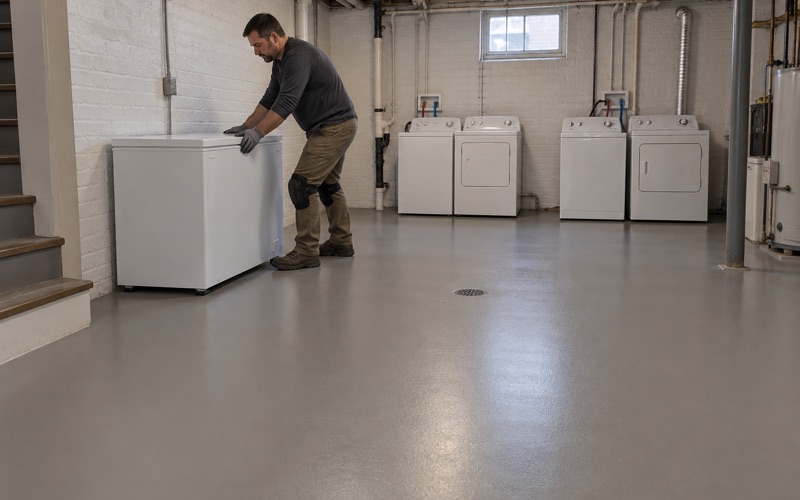
Before we coat a basement in this part of the village, we ask about the stairwell, its drain and any old water lines on the walls. Older basement floors are also checked for paint, patching compound and old adhesive before a system is picked, since any of them can lift a new coating.
What sits on the slab
Cardboard boxes, carpet remnants and wooden shelving resting directly on a garage floor hold water against the coating for days after a storm. That is hard on any finish and harder on the contents. On these blocks we suggest metal shelving on feet, nothing absorbent touching the floor, and a clear strip along the door.
After a storm, the cleanup order matters. Squeegee the water and silt out the door first, then rinse and dry the floor, rather than letting grit dry on the surface and get ground in by the next set of tires.
The Door Edge, Slope and a Floor Built for the Bad Storm
This is where the street water turns into a specification. The parts of a garage floor that matter most on these blocks are the ones that get the least attention elsewhere.
The slab edge at the door
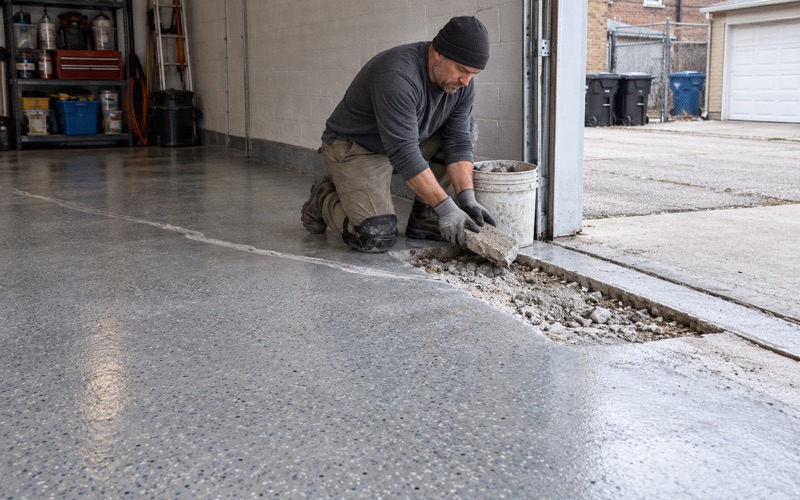
The first two feet inside the door take the most punishment: tires, brine, rock salt and, here, the occasional sheet of street water. We map cracks, spalls and old coating there first, and a crumbling or heaved edge is repaired, or flagged for replacement, before anything is coated over it.
We end the coating cleanly at the threshold and cut a keyway into the concrete where the system stops, so the edge is locked into the slab rather than feathered thin where water and salt can work underneath it.
Slope toward the opening
Most garage slabs pitch toward the door so melted snow runs out. That same pitch lets street water run in. We check the slope before quoting, because a coating follows the slab it sits on. It will not correct a low spot or a reversed pitch, and a puddle that sat on bare concrete will sit on epoxy too.
Where a slab drains toward the house, the fix is in the concrete, and reshaping a garage slab is a different scope from coating one. We say so in writing instead of selling a finish that hides the problem for a season.
Choosing the system
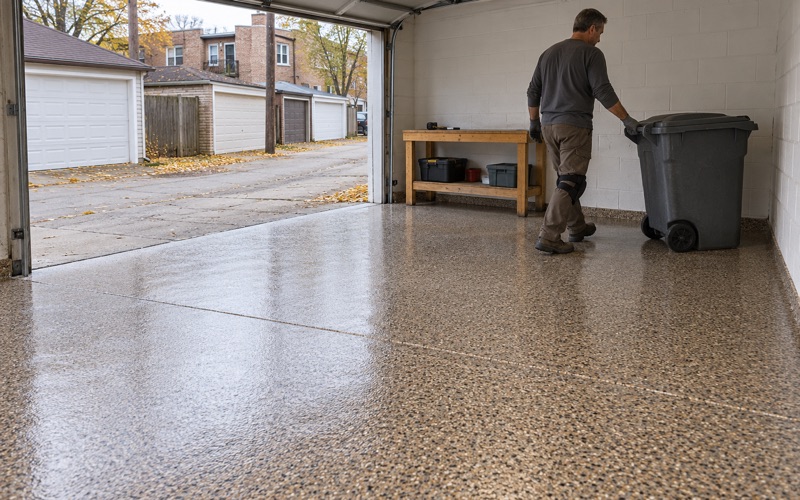
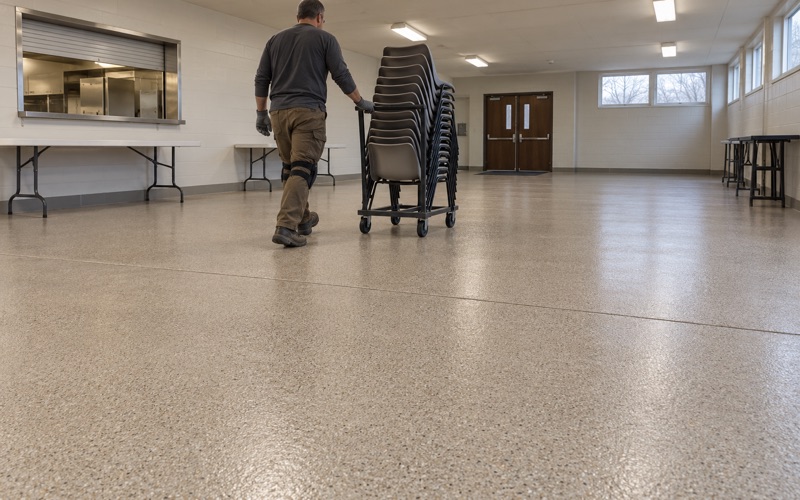
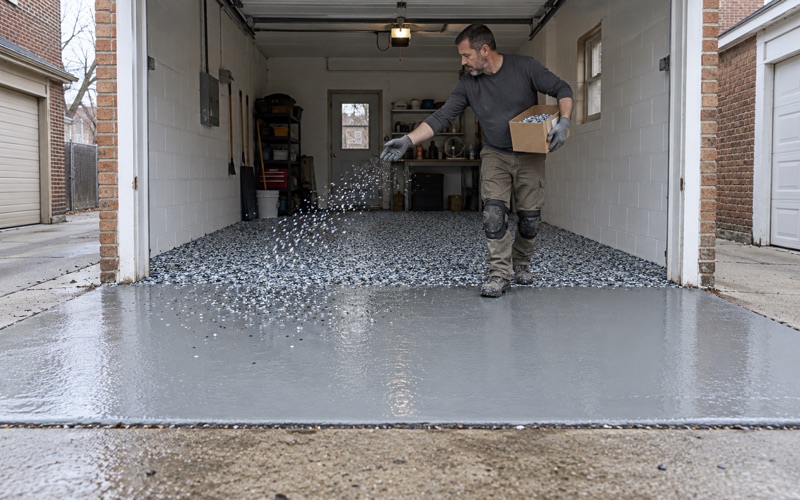
For these garages we lean toward a 100% solids epoxy base with a vinyl flake or quartz aggregate broadcast and a polyaspartic or polyurea topcoat. That build resists hot tire pickup, keeps texture for footing when wet, and cleans up after silt and the brine and rock salt that ride in all winter.
Moisture is the first warranty exclusion we name, and we explain it before the job is sold. We test with ASTM F1869 calcium chloride kits or ASTM F2170 in-situ probes, and when readings run high, a moisture-mitigation primer or a urethane cement system goes into the scope and the price.
Timing the work
Cure is set by slab temperature and the dew point spread at the surface, not the calendar, so an unheated garage in January is told to wait. Near Salt Creek we also steer clear of coating during a week of forecast heavy rain, because fresh epoxy and standing street water should never meet.
Every contractor working in the village needs a Village of Brookfield Contractor License and a $10,000 License and Permit Bond, and Illinois has no state flooring license, so we confirm those local requirements and our insurance before the job is booked. Home jobs over the state threshold also get a written contract and the Illinois consumer-rights pamphlet before grinding starts.
- 20+ Years on Concrete
- Moisture Tested Before Pricing
- Written Coat-by-Coat Proposals